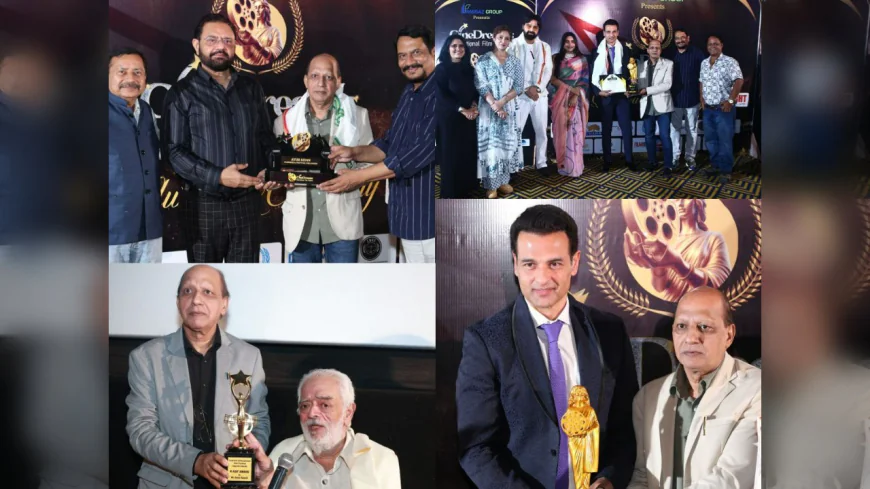
With over four decades of experience spanning filmmaking, production, writing, and distribution, veteran filmmaker Ayub Z. Khan has witnessed the Indian film industry's evolution firsthand. Yet, despite his long journey in cinema, he believes one of the industry's biggest challenges remains unchanged: access to opportunity.
Through the CineDreams International Film Festival, Ayub is working to create a platform that prioritizes emerging talent, independent voices, and meaningful industry connections rather than prestige-driven recognition.
According to him, the festival was born out of a desire to address a gap that many aspiring filmmakers continue to face.
“Film festivals are being organized everywhere today, but many have lost sight of their purpose. Recognition should not depend on influence or financial power. The real objective should be to discover talent and help deserving individuals find opportunities within the industry,” he said.
Ayub believes that a significant portion of the entertainment industry continues to operate within limited circles, making it difficult for newcomers to break through.
“Our goal is simple—to create opportunities for talented individuals who may not otherwise have access. The industry should welcome new voices, fresh perspectives, and hardworking people who genuinely want to contribute,” he explained.
The filmmaker is also vocal about the importance of originality in storytelling. He feels contemporary cinema must continuously push creative boundaries and offer audiences fresh narratives rather than relying on familiar themes.
For Ayub, the role of a film festival extends beyond screenings and awards. He sees it as an educational and collaborative space where filmmakers can learn from one another and broaden their creative horizons.
“Learning comes from exposure. When filmmakers watch cinema from different cultures, languages, and perspectives, they gain a better understanding of where storytelling is headed and what audiences are responding to across the world,” he said.
This philosophy is reflected in the festival's structure. CineDreams International Film Festival screens films throughout the day, offers free entry for audiences, and encourages attendees to engage with diverse cinematic works rather than limiting themselves to their own projects. The latest edition received submissions from 35 countries, alongside entries from multiple Indian regional language industries.
One of the festival's most distinctive initiatives is its effort to honor cinematic pioneers whose contributions have gradually faded from public memory. During the Mumbai edition, Ayub introduced awards named after twelve influential personalities from Uttar Pradesh who played significant roles in shaping Indian cinema.
The recognition continued at the Lucknow International Film Festival, where awards were presented in honor of legendary figures including filmmaker K. Asif, music composer Naushad, writer Rahi Masoom Raza, lyricist Majrooh Sultanpuri, novelist Munshi Premchand, actor Bharat Bhushan, actress Nargis Dutt, producer Prakash Mehra, actor Sujit Kumar, character actor Kanhaiyalal, sound engineer B.K. Chaturvedi, and former Prime Minister and poet Atal Bihari Vajpayee.
“Many members of the younger generation are unfamiliar with these personalities despite their immense contributions. Through these awards, we hope to keep their legacy alive and inspire future generations,” Ayub shared.
Alongside his festival initiatives, Ayub is also developing a new Hindi feature film titled Shubh Sangam under his banner CineDream Films LLP. The project will introduce fresh talent from Uttar Pradesh, providing opportunities for actors to make their mark in the industry.
For Ayub, recognition is particularly meaningful for newcomers. He believes festivals can serve as valuable spaces where aspiring artists receive constructive feedback and validation from experienced professionals.
“When a newcomer presents their work before industry veterans, they gain clarity about their strengths and areas of growth. That guidance can be transformative for their journey,” he said.
Looking ahead, Ayub plans to expand the festival internationally by taking CineDreams to Dubai and Sharjah. The move would allow broader participation from countries whose films currently face screening limitations in India, including Pakistan, China, and Afghanistan.
His vision remains rooted in impact rather than scale.
“If even five people find meaningful work because of this festival, I will consider it a success. Helping talented individuals move forward in their careers is the most rewarding outcome I can hope for,” he concluded.