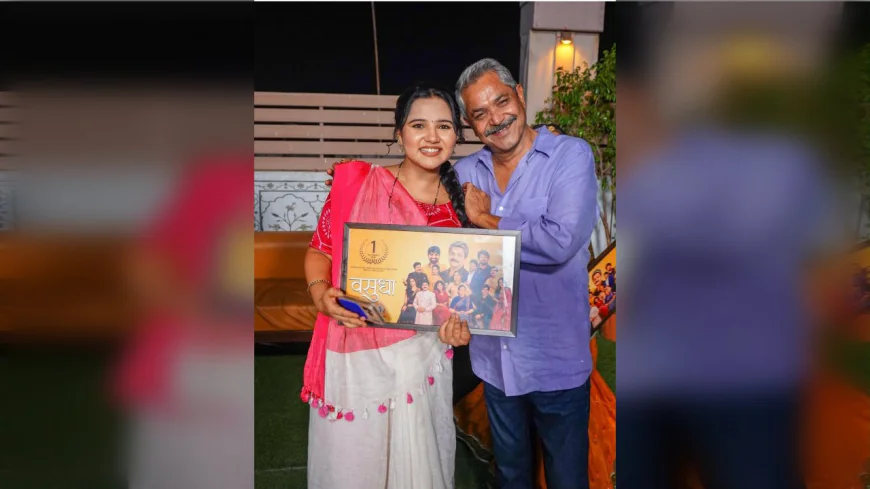
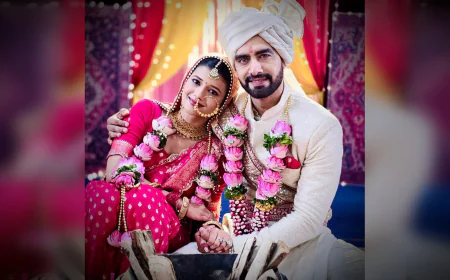
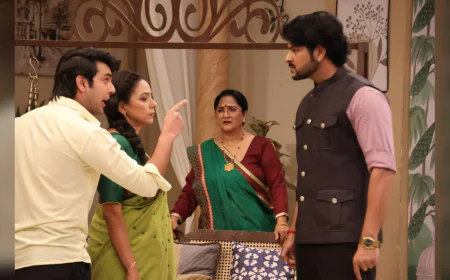
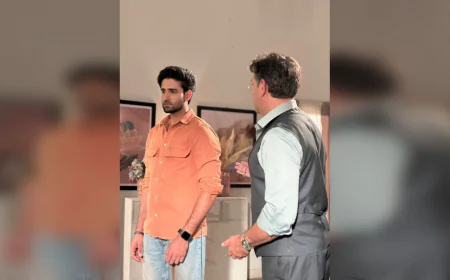
In the demanding world of Indian television, where daily soaps require relentless commitment and emotional depth, stories of quiet perseverance often shine brightest behind the screen. Director Arvind Babbal, at the helm of the popular show Vasudha, recently opened up about his lead actress Priya Thakur, painting a picture of determination, cultural rootedness, and tireless hard work that has shaped both the character and the production.
Babbal revealed that his search for the perfect Vasudha was deliberate and discerning. When he first met Priya Thakur, he immediately noticed qualities that set her apart from typical city-bred talents. “When we first met, one thing I really liked about Priya was that she is Pahadi, not from a city,” he shared. “Because of that, she had a certain straightforwardness and a strong sense of self-respect. That is exactly what I wanted in Vasudha as well — someone who is from a village and cultured but does not compromise on her values and principles.”
This inherent authenticity, Babbal believes, translated seamlessly onto the screen, giving the titular character an honest emotional core that resonates with audiences. Yet, the director is quick to emphasize that natural talent alone was not enough. Priya’s journey has been defined by extraordinary effort from day one.
“Priya has worked very hard,” Babbal noted, recalling the early days of filming in Udaipur. “She started from zero, and all of us moved forward alongside her.” He described how the entire cast and crew poured immense energy into their roles, with Priya emerging as a standout example of dedication. The demanding schedule of a daily soap — shooting multiple episodes weekly — leaves little room for error or complacency.
As the show progressed, the standards on set continued to rise. Babbal observed a marked evolution in preparation and professionalism. “Even today, no matter how much success you achieve, taking things for granted is very wrong,” he said. “Earlier, if we used to do two readings, now we do six. Everyone comes prepared from the makeup room and practices thoroughly, and no one forgets their lines here.”
The director likened the current atmosphere to students preparing for board examinations. “Looking at their preparation, it feels as if they first appeared for an 8th standard exam, then moved on to the 10th standard exam, and now they are preparing for the 12th board exams,” he added with evident pride. “Right now, the atmosphere on the entire set feels like everyone is preparing for their 12th board exams. Everyone is putting in extra effort and doing extra preparation. Seeing that feels really good.”
Such commitment comes at a personal cost, something Babbal does not shy away from acknowledging. The long hours take a toll on the cast, particularly the younger actors. “These people leave for home at 9:00 or 9:30 at night and then have to reach the set early again the next morning,” he explained. “They have to take care of themselves, take care of their character, and keep up with their preparation as well. It is very tough. For any actor, doing a daily soap is not an easy thing.”
Babbal expressed genuine empathy for his lead actress, admitting moments of sadness when he cannot grant her much-needed breaks. “Many times, I feel quite sad because sometimes that child just wants three or four days off, and I am unable to give her that,” he shared. “I feel like sending her away for ten days so she can meet her parents and relatives, but what can we do? We have to deliver 30 episodes a week.” The production team tries to offer one or two days off whenever possible, balancing the rigorous demands of television with the human needs of its performers.
Despite the challenges, what sustains the show is the strong bond among the cast and crew. Babbal highlighted how the on-screen family dynamic mirrors real relationships off-camera. “The family you see onscreen is just as strong offscreen as well,” he said. “Everyone lives like a family. If Dadi says something, everyone listens to her. During the scenes she is Dadi, of course, but even when she is not acting, she continues to be everyone’s grandmother offscreen as well.”
Through Priya Thakur’s story, Arvind Babbal underscores a fundamental truth about the television industry: success is rarely instant. It is built on humility, cultural grounding, relentless preparation, and mutual support. As Vasudha continues to unfold, the director’s observations remind viewers and aspiring artists alike that behind every compelling performance lies countless hours of unseen effort and a team that grows together, day after demanding day.
In an era where audiences crave authentic storytelling, Priya’s journey from zero to leading lady offers both inspiration and a deeper appreciation for the hardworking professionals who bring beloved characters to life on Indian television screens.