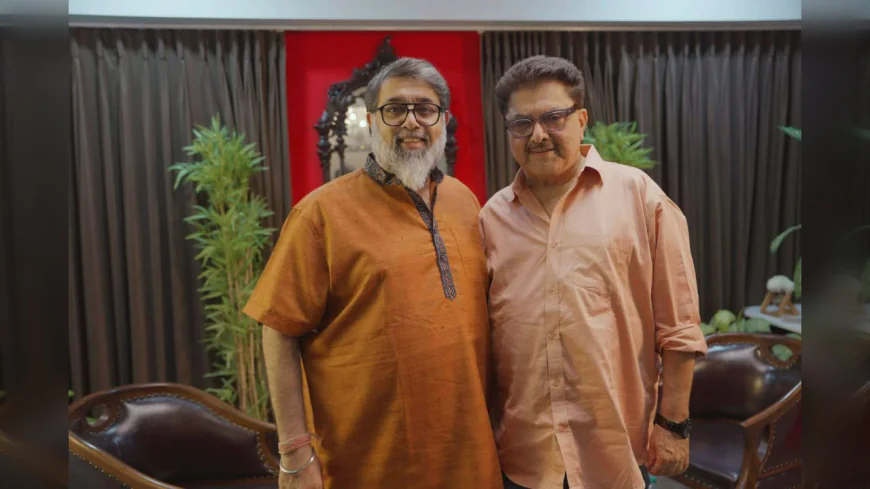
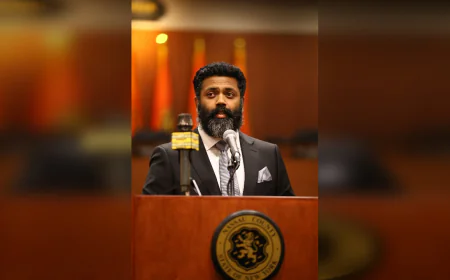
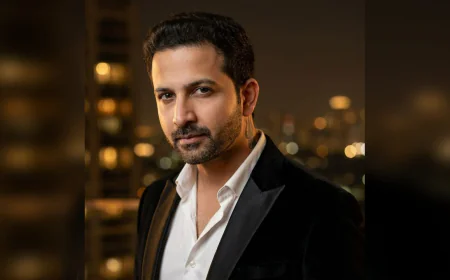
Filmmaker and social activist Ashoke Pandit recently appeared on The Vedas Speak, a podcast produced by Ajinkya Jadhav's Paparazzi Entertainment and hosted by Dr. Sammeer Arora. During the conversation, Pandit reflected on the values that have shaped his personal and professional life, touching upon spirituality, gratitude, Kashmir, humanity and the importance of selfless service.
Known for his work both in cinema and within the film fraternity, Pandit was asked where he derives the strength to balance multiple responsibilities while always being available to help others. In response, he credited his parents, his guru and the Almighty rather than his own achievements.
"I give all the credit to my parents and my Guru. I don't believe I have the power to help anyone on my own. If I am able to do something, it is because the Almighty has chosen me for that moment. I am just a medium. I have always stayed away from the arrogance of saying, 'I did this.' My upbringing taught me that ego destroys you, so I try to remain grounded," he said.
Speaking about the principles that guide his interactions with people, Pandit emphasised equality, sincerity and respect regardless of social status or professional position.
"If your intention is pure and you don't have a personal agenda, things fall into place. People understand when your help is genuine. I believe in treating everyone equally, whether it is a senior officer or a worker. At the end of the day, everyone is human, and respect should never depend on someone's designation," he shared.
Pandit also explained that spirituality, for him, goes far beyond rituals and ceremonies. He believes it is reflected in everyday acts of kindness, compassion and gratitude.
"I come from a deeply spiritual family, but spirituality is not just about rituals; it is about humanity. My gurus and my parents taught me that helping others, being kind and remaining grateful are the true essence of spirituality. Even small gestures like thanking people who help you or respecting nature have great significance," he said.
Addressing environmental concerns, Pandit urged people to reconnect with nature and recognise the consequences of exploiting natural resources.
"We have forgotten to respect nature. We destroy trees, mountains and rivers, and then wonder why disasters happen. Nature reacts. Every living being deserves the right to exist, whether it is a tree, an animal or a human. No one has the right to destroy another life," he remarked.
Reflecting on his upbringing, Pandit recalled how his mother instilled the values of generosity and hospitality within the family.
"My mother always believed that if your home is spiritual, it becomes like a temple. Whoever entered our house was never allowed to leave without eating. Whether there were ten guests or a hundred, there was always enough food. That upbringing taught me that life is not only about yourself; it is about sharing whatever you have with others," he said.
The conversation naturally turned towards Kashmir, a subject that remains deeply personal for the filmmaker. Speaking about his earlier film Sheen and the later success of The Kashmir Files, Pandit said both projects sought to bring attention to the suffering experienced by Kashmiri Pandits.
"It showed exactly what we went through. When Vivek Agnihotri made The Kashmir Files, people were more aware of the issue. The pain and trauma shown in the film are real and can never be forgotten," he stated.
Responding to criticism that such films promote propaganda or division, Pandit maintained that the focus should remain on condemning terrorism rather than associating it with any particular religion.
"We are not targeting any religion. We are talking about terrorism. A terrorist is a terrorist irrespective of religion. If anyone uses religion to justify violence, it must be condemned. As filmmakers, we may not stand at the borders, but we can fulfil our responsibility by presenting the truth," he said.
Despite the painful memories associated with the region, Pandit described Kashmir as a land defined by love, peace and natural beauty.
"Kashmir is all about romance—with nature, with people and even with God. Its true identity is love and peace. Bloodshed has no place there because it goes completely against its essence," he observed.
Pandit also reflected on the Hindi film industry's collective efforts during the COVID-19 pandemic. He revealed that industry associations worked together to identify thousands of workers in need and connected them directly with donors for financial assistance, ration supplies and medical support.
"It was all about teamwork and genuine intention. Many members of the industry quietly came forward to help workers by transferring money directly into their accounts and arranging essential support. During those difficult times, the film industry stood united, and that is something I am truly proud of," he said.
Concluding the discussion, Pandit noted that while the entertainment industry is often criticised, many people remain unaware of its compassionate side.
"People rarely see the human side of this industry. During COVID, while everyone was facing uncertainty, entertainment helped people remain emotionally strong. At the same time, countless individuals quietly extended support without seeking recognition. Ours is a compassionate and united industry, and I believe the country should be proud of that," he concluded.