Amal Sehrawat Shares Insights on Industry Politics, Networking, and Celebrity Culture
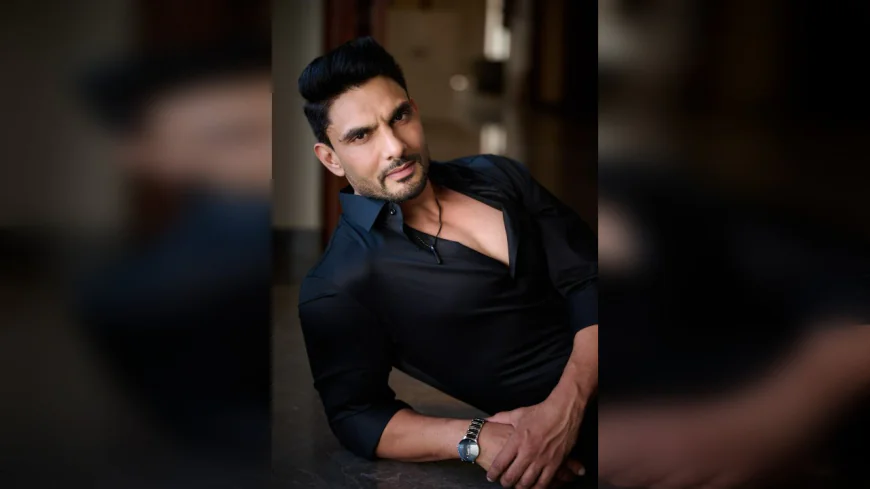
Mumbai: Actor Amal Sehrawat, known for his work across television and films, has offered a candid perspective on some of the entertainment industry's most discussed topics, including informal bans, networking culture, paparazzi attention, celebrity image management, and the evolving opportunities available to emerging artists.
Reflecting on the existence of informal bans within the industry, Amal acknowledged that while the landscape has changed significantly, certain traditional practices still persist. According to him, the increasing presence of international production houses and corporate-backed studios has altered the dynamics of filmmaking in India.
"The industry is witnessing a major transformation," Amal shared. "Many international production houses and corporate entities are now actively producing films in India. Since these organizations primarily view filmmaking as a business, they generally remain detached from industry lobbies and personal equations."
He believes this shift has made informal bans more difficult to enforce across the industry. However, Amal also noted that some traditional production houses continue to hold influence over casting decisions and professional opportunities.
"Certain established production houses still have the ability to impose informal restrictions when professional relationships change," he explained.
Discussing the role of networking, Amal emphasized that professional connections remain essential for growth and collaboration. However, he cautioned against situations where networking evolves into exclusionary practices.
"Networking is healthy when it creates opportunities and meaningful professional relationships," he said. "The problem arises when access to work depends more on personal circles, favoritism, or lobbying than on talent and merit."
According to Amal, deserving individuals can sometimes miss opportunities not because of a lack of ability but because they are not connected to influential groups within the industry. "That is where networking stops being constructive and starts becoming a barrier," he remarked.
When asked whether the entertainment industry has become more open to newcomers, Amal expressed optimism. He believes that filmmakers today are increasingly focused on finding actors who genuinely fit a character rather than relying solely on established names.
"The industry is definitely more open today," he said. "Many filmmakers are actively searching for fresh talent capable of bringing authenticity to their stories."
He also highlighted the impact of digital platforms and streaming services, which have significantly expanded opportunities for actors across different genres and formats. While challenges remain, Amal believes accessibility has improved compared to previous decades.
Sharing his views on the rapidly growing paparazzi culture, Amal suggested that the relationship between celebrities and photographers is often more complex than it appears.
"I believe nobody can completely intrude into an actor's privacy unless the actor allows that access to some extent," he stated.
He pointed out that paparazzi coverage often serves as an additional promotional tool for celebrities, with many appearances coordinated through public relations teams. At the same time, he noted that public figures who genuinely value privacy often take measures to avoid unwanted attention.
Amal also observed that celebrity teams frequently employ strategies such as blocking cameras or limiting access when photographers arrive uninvited.
Addressing the topic of public image management, Amal explained that celebrities today are not only promoting their work but also carefully cultivating personal brands.
"PR teams work extensively to build, maintain, and sometimes reinvent public images," he said. "Social media platforms play a major role in this process."
He further noted that public behavior, media interactions, and online communication are often strategically planned to reinforce a desired image. While celebrities maintain some level of control, external factors such as media narratives, public perception, and PR strategies significantly influence how they are viewed.
On the subject of controversies, Amal suggested that not all public disputes emerge organically. While genuine disagreements certainly occur, he believes some controversies are amplified intentionally to generate curiosity, maintain relevance, or support promotional campaigns.
"The entertainment industry is driven by intelligent and creative professionals," he said. "Many controversies are carefully crafted narratives designed to create visibility and spark public interest."
Concluding his observations, Amal emphasized that while authentic issues do surface from time to time, strategic amplification remains a common reality of modern celebrity culture. His comments offer a thoughtful glimpse into an industry that continues to evolve while balancing creativity, commerce, and public perception.