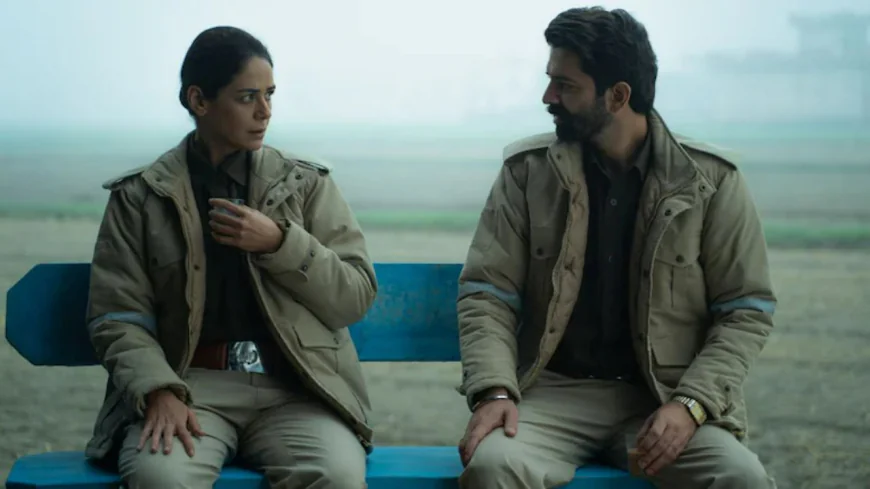
Kohrra Season 2 opens on a fog-laden winter morning in Punjab’s rural interiors, immediately reintroducing viewers to the gritty, unflinching tone that made the first season a critical favourite. The Netflix original continues its inside-out storytelling approach, using a fresh murder investigation to probe deeper social issues — bonded labour, regional discrimination, lingering scars of militancy, and the quiet weight of personal grief — while keeping the procedural core taut and engaging.
Barun Sobti reprises his role as Assistant Sub-Inspector Amarpal Garundi, now relocated to the fictional town of Dalerpura with his wife Silky (a spirited beautician dreaming of opening her own nail bar). Garundi has tried to leave his troubled past in Jagrana behind, but old shadows linger, especially when his pregnant sister-in-law arrives to stay. Sobti brings understated intensity to Garundi’s internal conflict — guilt, shame, and the constant effort to maintain composure — making his performance one of the season’s quiet anchors.
Joining him is Mona Singh as Sub-Inspector Dhanwant Kaur, a hardened yet deeply wounded officer carrying the unbearable loss of her son in a road accident years earlier. Singh delivers what may be her most layered role to date: a mother whose grief has hardened into resolve, a wife who picks up her alcoholic husband Jagdish (played with tragic restraint) from roadside bars without a word, and a cop who refuses to let emotion derail duty. Dhanwant’s haunted eyes at the bus stop — forever waiting for a son who will never return — remain one of the season’s most piercing images.
The central case begins with the murder of Preet Bajwa, an NRI and social media influencer known for her dance reels. Found dead at dawn in a barn on her brother Baljinder Atwal’s property, Preet’s complicated life — strained family ties, marital discord, questionable choices — makes her both victim and enigma. As Garundi and Dhanwant investigate, the case spirals: four migrant labourers from North India are found charred and chained inside Baljinder’s poultry farm, victims of modern-day bonded labour. Another woman, Mahi Verma, who had an affair with Baljinder, is brutally assaulted. Bodies mount, motives tangle, and the detectives must navigate a web of silence, fear, and systemic neglect.
Creator Sudip Sharma and director Randeep Jha maintain the series’ signature realism. Police work here is unglamorous — officers limp back to duty after beatings, rely on instinct more than gadgets, and carry personal demons that bleed into every case. The show dismantles the myth of invincible cops: these are ordinary people who bleed, grieve, and persist.
Particularly powerful is the portrayal of migrant labour exploitation. A young worker from Jharkhand searches desperately for his father, missing for over two decades, while facing daily discrimination as a “bhaiya.” The subplot never feels didactic; it is woven organically into the investigation, exposing how economic desperation and regional bias create invisible chains.
Mona Singh’s Dhanwant stands out as the emotional core. Unlike conventional on-screen mothers, her motherhood is not her sole identity — it is one facet of a complex woman shaped by irreversible loss. Her evolving dynamic with Garundi — initial friction giving way to mutual respect and quiet vulnerability — provides the season’s most affecting arc.
Sobti matches her intensity, portraying Garundi’s struggle to reconcile past mistakes with present responsibilities with subtlety and depth. Supporting performances — especially the quiet devastation of Jagdish and the layered portrayal of Preet’s family — add authenticity to the ensemble.
While the first season focused on Punjab’s drug crisis, Season 2 touches on the lingering trauma of the 1990s militancy era, using it sparingly but effectively to explain character motivations and societal fractures. The narrative ends on a hopeful note for both leads, leaving room for future seasons while delivering closure that feels earned.
Kohrra Season 2 succeeds because it never lets social commentary overshadow character or suspense. The murders feel real, the grief palpable, the investigation methodical. Mona Singh gives a career-highlight performance as a mother and cop who refuses to be defined by either role alone, while Barun Sobti proves once again why he remains one of Indian television’s most reliable dramatic actors.
For viewers who appreciated the slow-burn realism and emotional honesty of the first season, Kohrra Season 2 raises the stakes without losing its soul. It is a reminder that the fog in Punjab’s fields hides not just crimes, but the quiet, everyday battles people fight long after the headlines fade.