Vishal Bhardwaj’s O'Romeo arrives as a bold, uncompromising addition to Indian cinema’s crime-drama landscape, delivering a three-hour experience that rarely allows the audience a moment of respite. The film fuses the sweep of Shakespearean tragedy with the gritty conventions of Mumbai underworld tales, drawing clear inspiration from The Godfather while rooting itself firmly in the city’s mid-1990s gang wars and their international tentacles.
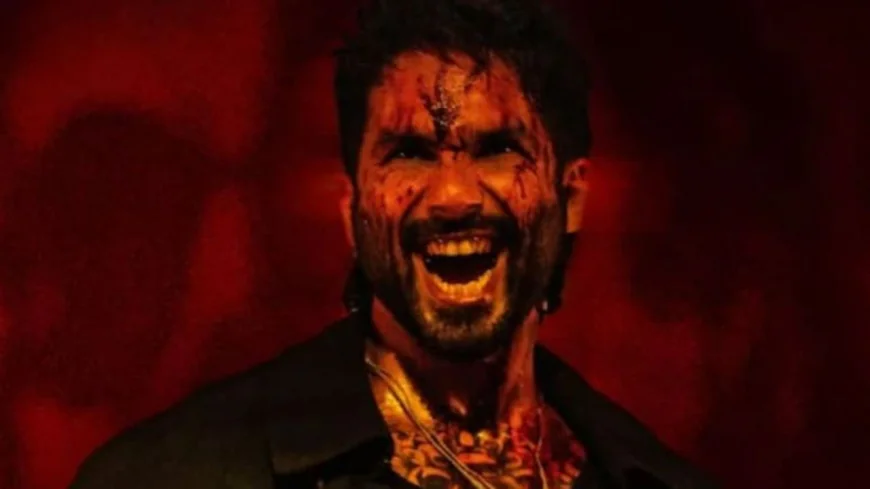
At its core, O'Romeo is the story of Ustara (Shahid Kapoor), a razor-wielding hitman known for the surgical precision of his kills, and Afshan Qureshi (Triptii Dimri), a soft-spoken widow seeking vengeance for her husband’s murder. Their paths cross when Afshan commissions Ustara to eliminate four men responsible for her loss, setting off a chain reaction of bloodshed, betrayal, and unexpected love. Adapted from a story in Hussain Zaidi’s Mafia Queens of Mumbai and scripted by Rohan Narula and Bhardwaj, the narrative spans Mumbai’s docks, Irani cafés, and a Spanish bullfighting ring, where exiled mafia don Jalal (Avinash Tiwary) orchestrates operations with ISI links post-Babri Masjid demolition.
Bhardwaj’s signature style is unmistakable: he refuses to let the screen go dull. Bursts of extreme, stomach-churning violence alternate with moments of startling lyricism, courtesy of Gulzar’s evocative lyrics and the director’s own haunting score. The songs function not as interruptions but as narrative pillars, seamlessly woven into the plot through staged set pieces and background motifs. Red dominates the visual palette — from blood-soaked sequences to the fiery bullfighting arena — yet Bhardwaj introduces striking variations, including one surreal moment where blood appears blue on canvas, reflecting the fractured psyche of Jalal’s wife Rabia (Tamannaah Bhatia).
Shahid Kapoor delivers one of his most layered performances to date, reuniting with Bhardwaj for the fourth time after Kaminey, Haider, and Rangoon. Ustara is both manic and brooding, a womaniser who turns vulnerable in love, a killer who recoils at the moral cost of each death. In a standout early sequence, he storms a movie theatre mid-screening of a Madhuri Dixit film, razor in hand, dispatching bodyguards amid “Dhak Dhak Karne Laga” playing on screen — a scene that sets the tone for the film’s audacious blend of violence and cultural reference.
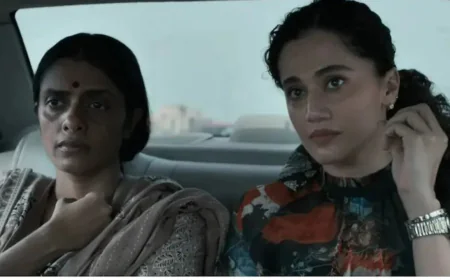
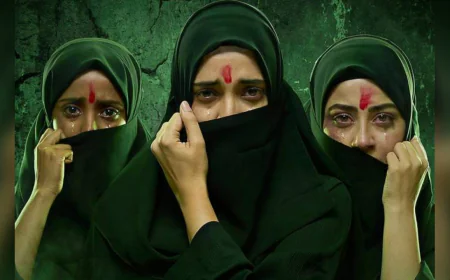
Triptii Dimri brings quiet steel to Afshan, transforming from a grieving widow into a determined force who refuses to hide her face or her pain. Avinash Tiwary lends menace and sophistication to Jalal, while Nana Patekar’s Intelligence Bureau officer Ismail Khan provides measured authority and moral ambiguity. Supporting turns from Rahul Deshpande (as a corrupt classical-singing cop) and Vikrant Massey (in a brief but impactful cameo) add texture to the ensemble.
Cinematographer Ben Bernhard, production designer Mustafa Stationwala, and editor Aarif Sheikh create a visually arresting world that never loses momentum. The film glides between timelines with fluid flashbacks, maintaining clarity even as the pace accelerates toward its bloody climax.
O'Romeo earns its A rating through graphic, context-driven violence that never feels gratuitous. Ustara’s own words — “When you kill, you cross a line, and a human becomes a monster” — anchor the bloodshed in moral consequence. The film explores love as both salvation and curse, power as corruption, and revenge as a double-edged blade, refusing easy hero-villain binaries.
While the vigilante subplot involving a mysterious “Umbrella Man” occasionally feels convenient, it does little to diminish the overall impact. Bhardwaj’s willingness to push boundaries — blending poetry, music, and unrelenting action — elevates what could have been a routine revenge saga into something vivid, visceral, and visually unforgettable.
In an industry often criticised for formulaic storytelling, O'Romeo stands apart as a reminder of what mainstream Hindi cinema can achieve when a director refuses to compromise vision for comfort. It is exhausting, exhilarating, and impossible to ignore — a film that bleeds red, sings in verse, and lingers long after the credits roll.