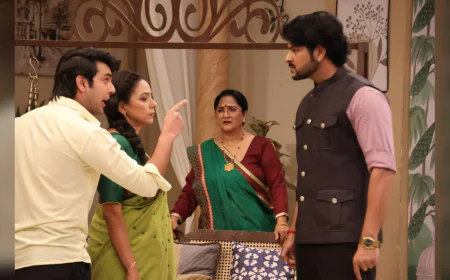
Bhojpuri cinema’s prominent face Monalisa has opened up about a challenging and ultimately brief stint on the high-profile reality show The 50, alleging both industry-based discrimination and noticeable gender bias in how female participants were treated during gameplay.
In an exclusive conversation with SCREEN following her eviction, Monalisa described her journey as “very short-lived” and filled with unexpected hurdles. She and her husband, Vikrant Singh Rajpoot, entered the house hoping to form new alliances and friendships among the 50 contestants. “We thought we would make new friends on the show,” she recalled. “While we understand that our vibe won’t match with all 50 people, I thought I would at least befriend a few people and plan the game from there.” Instead, she encountered an environment shaped by pre-existing rivalries and grudges carried over from previous shows and personal histories. “People had brought their fights and controversies from outside into the house,” Monalisa said, explaining why she struggled to integrate and find her footing.
On the widely discussed issue of gender bias, several female contestants have publicly claimed that prominent male players — including Rajat Dalal, Prince Narula, Mr. Faisu, and Siwet Tomar — treated women primarily as vote banks, frequently placing them in vulnerable positions or danger zones. Monalisa offered a nuanced perspective, suggesting responsibility rests partly with the women themselves. “The matter of girls not being treated fairly also depends on the girls in the game,” she stated. “Why didn’t I become anyone’s favorite? The problem was that many girls chose to showcase their personality by attaching themselves to others. Had they not done that, they wouldn’t have faced such treatment. Women should have been more vocal.”
She added that her own eviction felt orchestrated, with a strategy to eliminate smaller or less-aligned teams first. “When I got evicted, I saw that it was planned; they wanted to evict the smaller team first. All the girls also supported them in this; they shouldn’t have done that,” Monalisa asserted, expressing disappointment at the lack of solidarity among female participants.
Addressing separate allegations of bullying raised by contestants such as Bhavya and Khanzaadi, Monalisa maintained a firm stance on personal strength and independence. She said she had limited interaction with Khanzaadi, describing her as “very rude” and having misbehaved toward her. Regarding Bhavya, her former roommate, Monalisa questioned how anyone could allow themselves to be bullied. “It all depends on you,” she emphasized. “If you keep yourself strong, no one can tell you what to do. If that gets me evicted it’s fine, at least I won’t be called someone’s sidekick. I cannot tolerate someone saying that I came so far with someone’s support, because I didn’t.”
The deepest wound, however, came from what Monalisa perceived as overt discrimination tied to her professional background in the Bhojpuri film industry. Despite having worked in mainstream television for the past seven years, she felt repeatedly sidelined and judged by fellow TV actors and digital influencers. “What I felt the worst about was… I indeed belong to the Bhojpuri industry; I have done 200 films there, and I come from the regional zone,” she shared. “But for the last seven years, I have also been working in the TV industry. But I didn’t understand why I was being sidelined. I felt the discrimination and only wondered why it happened.”
Monalisa’s candid account adds to the growing conversation around inclusivity, fairness, and power dynamics inside The 50 house. While the show continues to draw strong viewership, her experience highlights persistent challenges faced by contestants from regional entertainment sectors and women navigating alliance-driven gameplay.
As the competition progresses, these revelations serve as a reminder that reality television often mirrors broader societal attitudes — including lingering biases toward regional industries and unequal treatment based on gender. Monalisa’s exit may have been brief, but her reflections have sparked renewed scrutiny of how respect, opportunity, and recognition are distributed among participants from diverse backgrounds.